Fouch’s Christmas Tree Farm
Mia Pohlman | November 8, 2013
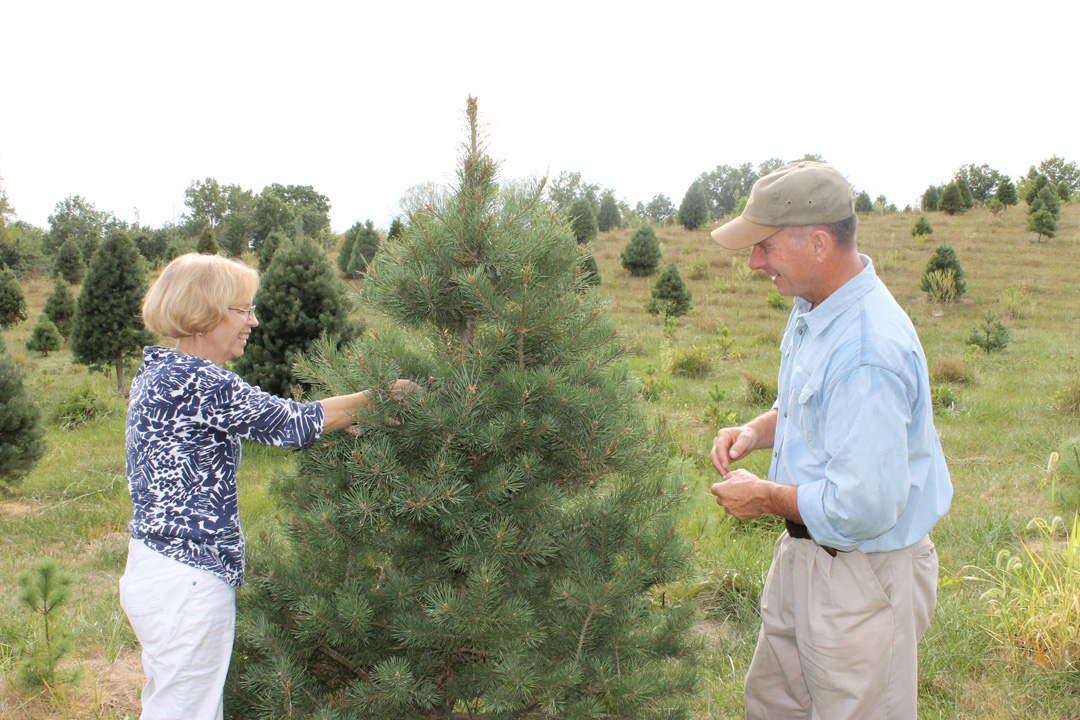
Janie Fouch helps families celebrate the Christmas spirit. For the past 30 years, she and her husband David have run Fouch’s Christmas Tree Farm in Kirksville, Mo., with the help of their six children and David’s parents. They started the farm to get their family involved in a project together and to earn money for their children’s college funds. Today, their 20-acre farm is home to 9,000 Scotch and white pines that families — many of which are lifelong customers — come each November and December to buy.
Randy Mikel and his family are some of these lifelong customers. Randy, his wife Shirley, their five daughters and three of their son-in-laws have been coming to Fouch’s Christmas tree farm for 20 years. The Mikels enjoy the tradition, smell and feel of putting up a live tree in their home. Randy says he loves the setting at Fouch’s Christmas Tree Farm.
“The walk through the acreage trying to find the perfect tree, measuring, cutting, half of our group at one side of the field, the other half at the other … it literally turns into an expedition,” Randy says. “Those are memories, you just can’t replace those.”
In order to help families create these memories, the Fouch’s work nearly all year round– from April to December. They can spend up to 80 hours per week caring for the trees.
Beginning in April, the Fouch’s mow the grounds and plant new saplings, spraying herbicide around them so weeds don’t prevent them from growing. Throughout the summer, they continue to mow the grounds and prune the new trees. Trees that are at least three years old are sheared with a Christmas tree shearer, which Janie says looks like a long Weed-Eater. In the fall, the Fouch’s spray some of the trees again to improve their color. The Sunday before Thanksgiving, the Fouch’s open the tree farm for business. They shape the Christmas trees for customers, shake out the dead needles and tie the trees with twine.
On the farm, Janie helps David spray the trees. She explains her real passion, however, is making wreaths from the branches pruned off the Christmas trees.
“I definitely don’t have a green thumb. I like to make the wreaths and to decorate the wreaths,” Janie says.
She begins making bows for the wreaths during September and has 250 bows made before what she and her family refer to as “tree field season” — the time between Thanksgiving and the week before Christmas when customers buy trees from their farm. She makes the wreaths from greenery that customers don’t want on the bottom of their tree and from trees that aren’t sellable. David brings the greens in to Janie, who cuts them to the size she needs, clamps them into a wreath design and then decorates them with the bows. It takes Janie 30 minutes to make one wreath. Customers then buy the wreaths from the farm and also custom-order them.
Besides decorating wreaths, Janie decorates three of her own live Christmas trees each year. She decorates the tree that sits on her porch with lights only, and the two indoor trees with the ornaments her children made throughout the years while they were growing up.
“I’m still into tacky kid trees and I don’t think I’ll ever get away from that. … It’s just so much fun getting them out every year, because you forget about things,” she says.
Janie keeps her trees up from Thanksgiving until the middle of January. In order to keep them alive this long, she shaves off bark from the bottom of the tree after it has been transported from the farm to her house. The tree seals itself over if it is out of the ground for too long and shaving away some of the bark allows the tree to drink water again. Janie says the trees need a gallon of water per day for the first few days. After that, the amount of water they require is less, but she says it is still important to take time to keep them watered.
Janie and David planted Christmas trees for the last time during spring 2013 and plan to be in the Christmas tree business for another 10 years as the last round of trees matures for sale.
“If you had it to do all over again, would you still have a tree farm?” Janie asks David while he takes a break from pruning the trees.
“I think,” David says, laughing.
Because of the amount of work it takes, Janie says that 90 percent of new Christmas tree farms don’t make it long enough for the trees to mature for sale. The work Janie and her family have put into their farm, as well as their enthusiasm for sharing the Christmas spirit with each other and other families, has made the Fouch’s Christmas tree farm one of the exceptions.
For more about Fouch’s Christmas Tree Farm, pick up our Winter 2013 issue, also available on iTunes for tablet.