
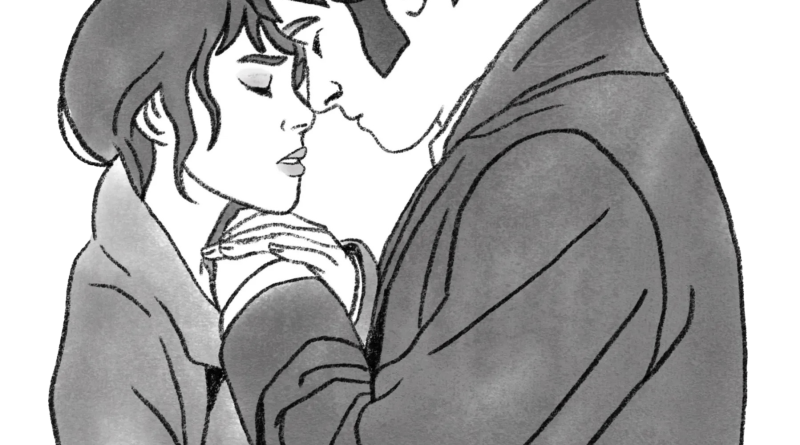
The Debate Over Which “Pride & Prejudice” is Better is Long-Drawn-Out
“Pride & Prejudice” is a beloved tale among many, being best known for its witty writing, unlikely romances and variety of characters. If you are a Jane Austen fanatic like myself, then you know how common this question is brought up among fellow fans — which “Pride & Prejudice” adaptation is better, the mini-series from 1995 or the film from 2005?
Before I explain why this argument is so unnecessarily prolonged, I must confess that I was formerly partial to the 2005 adaptation, despite never seeing the mini-series. With the delicate music at its beginning, the chemistry between actors Donald Sutherland and Brenda Blethyn, who play Mr. and Mrs. Bennet, and the overall atmosphere and scenery — among numerous other factors — how could I not be partial to this masterpiece of a movie? However, after watching the BBC miniseries, I do admit that the 2005 movie has its fair share of shortcomings.
The entire mini–series has around five and a half hours of screen time, so there is much more room for character development. This is especially true with Mr. Darcy, the eventual love interest of Elizabeth “Lizzy” Bennet.
While at the beginning his conceit and arrogance are very evident in his actions and words, he gradually and beautifully develops into a man of generosity, benevolence and kindness. While we do see these same characteristics in the 2005 adaptation, they are less pronounced due to the shorter screen time — around two hours.
On a similar note, because there is more screen time in the 1995 adaptation, we get to see more personal features of several characters. We get to see more of the prideful intelligence of Mary, as well as her ignorance, especially when she unknowingly embarrasses her family at the ball at Netherfield due to her amateurish pianoforte playing and singing.
Lastly, the extra screen time in the BBC miniseries allows for more content of the original book to be explored. This is especially done through the letters that are sent to various characters throughout the book. In the 2005 movie, the letters are simply shown to the viewers, whereas in the 1995 miniseries they are read aloud, allowing viewers both an auditory representation of the writers’ thoughts and emotions and a visual representation of those of the recipient.
While both adaptations have their advantages and disadvantages, few Jane Austen fans make this fact publicly known. Instead, many of them immediately pick sides as to which one is entirely and completely better than the other, refusing to regard the advantages of the other, and much less the drawbacks of their own.
While the 1995 mini-series certainly is a better pick in terms of accuracy to the original novel and its characters, the 2005 film makes up for it in its music, small details strewn throughout — such as Mr. Darcy looking for Lizzy at the Netherfield ball and many other amiable qualities.
So, to the question of which “Pride & Prejudice” adaptation is better, here is my answer — why can’t we appreciate both?