Stokes Stadium implements new bag policy to limit alcohol usage at sporting events
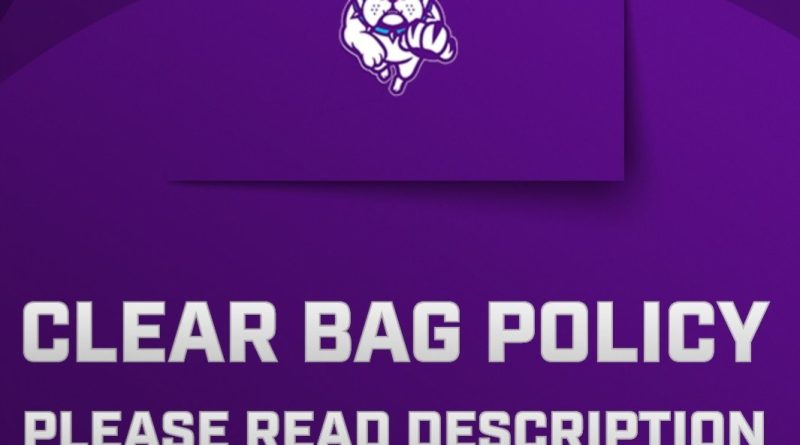
Stokes Stadium is operating under a clear bag policy, as of Sept. 12. The clear bag policy will enable fans to enter the game without undergoing a bag search for anything that may pose a risk to personal safety, ensuring a smooth and non-invasive admission process. Attendees under this policy will be required to use clear bags rather than opaque bags at events. By implementing the clear bag policy, the Department of Public Safety and Truman State University Athletics hope to alleviate safety concerns associated with athletic events.
Truman is not the only university making these changes. This remains the case with other schools across the nation, as event safety is an increasing problem. The University has collaborated with other schools in the GLVC and found that the clear bag policy has worked within their programs. The biggest reason for the clear bag policy, according to DPS, is alcohol consumption that comes with tailgating. Other colleges within the GLVC, such as William Jewell College and the University of Indianapolis, have allowed alcohol at tailgates before games, but not allowed people to bring it into the stadium. The University has allowed alcohol consumption at tailgates since 2011, but now the clear bag policy will help enforce that rule and ensure that alcohol does not end up in the stadium. DPS Chief Sara Seifert explained alcohol is not absolutely banned on game day, just not allowed in Stokes Stadium.
“We made the decision, you know, the administration did, along with us [DPS] and Athletics, to implement the clear bag policies, so the alcohol stayed outside the stadium,” Seifert said. “If people wanted to go out there and consume alcohol, that’s great. That’s fine. Just don’t bring it into the stadium. And so that’s why we implemented the clear bag policy.”
The main focus of the policy is safety. For students, athletes, coaches, faculty, parents and fans from the community, the policy is in place to protect everyone’s personal safety. Unfortunately, issues with personal safety, specifically on school campuses, have become a major topic of discussion. DPS believes that this policy will keep people safe by allowing more transparency within the stadium. With no more concealed bags, there is less of a chance that someone might be bringing in banned substances or a weapon, or such items might be spotted earlier on before a situation becomes dangerous.
The hope is that the University’s community will be responsible and acknowledge the reasoning behind the policy. Alcohol is the biggest threat to this policy right now, and has been the main reason behind it. Seifert wants people to enjoy the game without worrying about what is allowed into the stands and how that might affect them.
“It’s an athletic event. We want everybody to have a good time, but we don’t necessarily want the alcohol becoming a factor in the games,” Seifert said. “Right now, I think the parents and the students are responsible, and we have a lot of good students that go here. So, it’s my hope that most people will obey the rules and do the right thing, and we’ll be able to have alcohol at the event, but have it not affect the event.”
As for the student opinion, many students are indifferent about the policy. The main backlash has been the water bottle policy. Having to dump out their drink has been an inconvenience for students, but a majority say they understand the reasoning.
Clearly, this policy is a change from prior years. However, the student population is handling it well. Freshman student Riley Connell approves of this policy because it makes for a safer game day environment.
“People around you feel more safe, even if it’s minor things,” Connell said. “If someone’s digging in their bag for a long time, it could kind of make you think of what are you going to be reaching for. Like, what do you have in your bag? There’s no need to worry. It makes it so much easier for security just to look and make sure there’s not a weapon or drugs or alcohol, or anything of the sort. So it makes everything a whole lot easier and safer for the environment, the people at the games, the football stadium, and the people that have to clean it. At the end of the day, I feel like it saves a whole lot more energy, time, and it’s not something that’s super hard to adjust for. It’s just a clear see-through bag.”
Overall, the transition of the clear bag policy has been well-received. This could be attributed to the amount of information released before the first game. There were social media posts and posters throughout campus that brought awareness to the new policy. Along with the policy notices, clear bags are now provided by the booster program and also sold in the bookstore.
The policy has become more common within schools and other sports facilities after the National Football League announced a league-wide clear bag policy in 2013. The University is just now implementing such a policy, while many schools are years ahead. Where it may have been a problem for some schools to make the switch, with little communication to fans, the athletics department seems to have handled it well by making sure the community was prepared. Athletic Director Signe Coombs considers the transition to be successful.
“I personally thought it went pretty well. I really think it was very smooth, but I think that that is a tribute to the marketing and the advertising, the communication that went out prior to be able to disperse that information,” Coombs said. “So everybody came prepared on that first game day.”
With the successful transition of the clear bag policy, we may see new safety policies come in the future. There may eventually be a clear bag policy within other athletic events at the University, such as basketball games and swim meets, with the main goal being student and community safety.
“I think there’s going to come a day, probably sooner rather than later, that we will be, you know, searching bags at every game, and may implement a clear bag policy,” Seifert said. “…We’ve had events on campus where safety has been an issue, and we’ve said no backpacks, no bags. Everybody was, you know, could be potentially wanded with a metal detector on the way in. We’ve done that before. I hope that doesn’t become a regular thing. But we’re definitely all about the safety of the students. So if it does come to that, that’ll be something we’ll probably see.”