
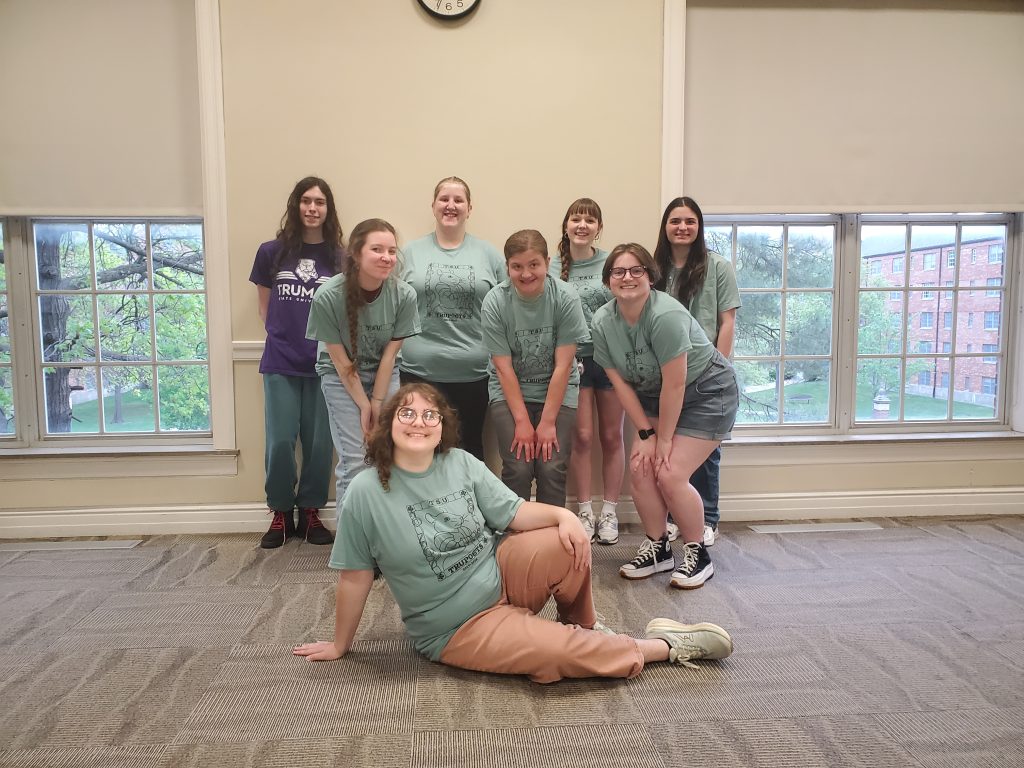
Ending the spring with growth: TruPoets holds final open mic of the year
Words and images float in the air, music rings out, reaching the ears of all present. This is an open mic hosted by TruPoets, the poetry club at Truman State University, every semester. The last one was April 22.
TruPoets tries to host at least two open mics per semester. Before each open mic, meetings are spent workshopping poems from members and offering critiques.
Caitlin Hill, a freshman studio art and creative writing major, found much inspiration from going to TruPoets meetings.
“In high school I wrote poems for assignments and occasionally I might write a poem in my notes apps, but it was never something I made a habit of doing. In [TruPoets] I really got to explore that,” Hill said.
For TruPoets members and other students, the open mics allow them to not only showcase their work, but also to nurture the relationships they have with their peers and themselves.
Dean Chapman, a senior communications major and president of TruPoets, thinks that the open mics provide a crucial opportunity for public speaking and growth for the poet.
“Open mics are a big part of poetry in general. Spoken word, being able to perform your piece in front of more than just poets is always a great moment, not only to get public speaking experience for poets, but also, everyone wants to showcase their art,” Chapman said. “For poetry, our open mics are our ability to showcase that.”
Both Chapman and Hill said they have gained meaningful friendships and a greater appreciation for art as a result of being a part of TruPoets.
Chapman and Hill hope that the open mics give inspiration and a greater appreciation for poetry to people who do not already write it themselves.
“I think it’s important to hear art in an oral form. A lot of times we see it and we’re distanced from the person who created it,” Hill said. “But when you’re seeing an amateur or an intermediate writer, not a professional, not a professor, just a student, who is there bearing their soul onto you, you’re so connected to that, and I think that experience is very important.”