Checking in: A look at the Cannabis and Natural Medicinals major
Since its introduction three years ago, the cannabis and natural medicinals major has continued to educate students on science-based, medical, social and business-related cannabis practices.
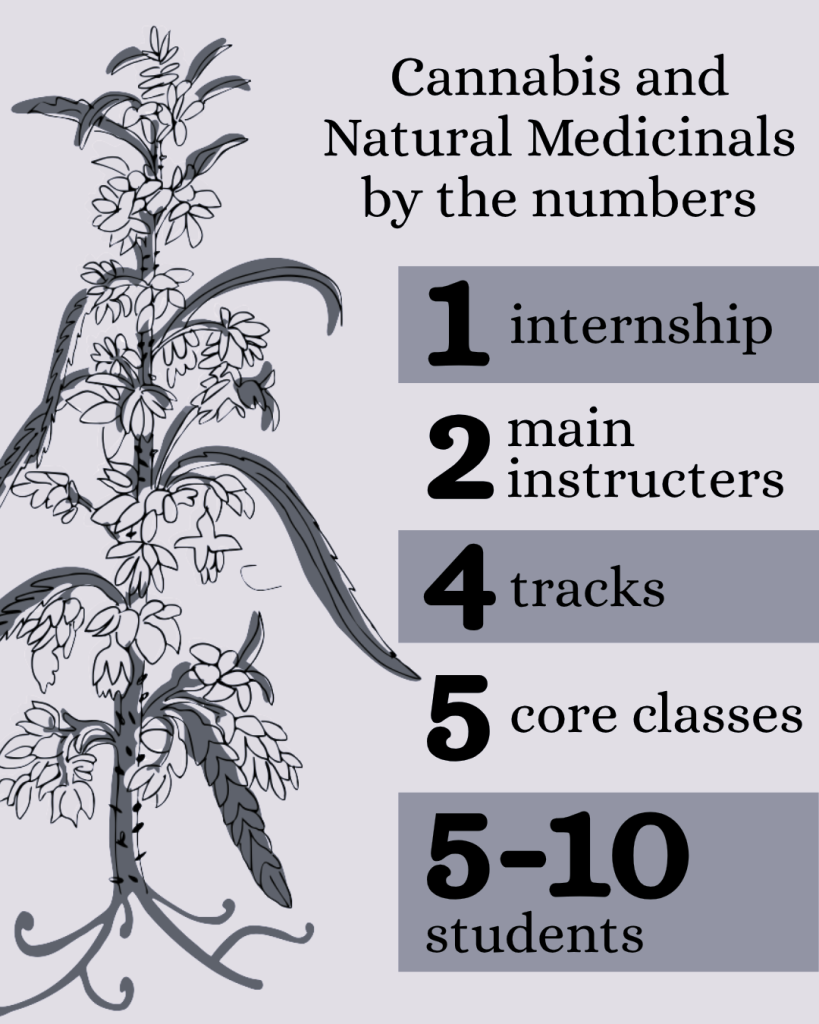
The major itself explores different naturally-based plant compounds and how they can be used in real-world settings. While there are core classes that every student in the major must take, they also must choose one of the four areas of study – analytical science, society and philosophy, cultivation or business and entrepreneurship.
Besides being brought in to teach cultivation classes at the end of the major’s first year, Josh Kraft, assistant professor of agricultural science, said there has been little to no change within the major yet. Since the major is so new, he said the main focus of the staff has been figuring out how to serve students at various levels of education, and finding a way that works best for everyone.
Kraft also said he believed it was important to increase the awareness of the major across campus and make classes in it more available to students outside of the major.
“When I first got here, the thing that surprised me most was [the major] wasn’t something that many people knew about,” Kraft said. “We worked a lot on trying to increase that publicity a little bit, and making sure students know we’re here. But, all the students I’ve talked to, once I tell them about the major, they tend to be pretty excited about it. From a personal standpoint, my goal would be that we could continue to improve the standing of the major by bringing in some students from outside the major, but that is something that might be a little bit down the road before we get there.”
When it comes to general student opinion, Gannon Rejniak, junior cannabis and natural medicinals major, said he believes many outside students get lost in the first half of the major name, and don’t recognize that there is more to engage with besides just cannabis. As a student studying under the business and entrepreneurship track, Rejniak said he spends time learning about the history of natural medicinals, business practices, and cultivating cannabis.
For Rejniak, having repeated classes with the same group of people has allowed him to foster closer relationships within the major. He also said the professors he has worked with have been a driving force for staying involved in his classes.
Since he said many people in the cannabis industry are self-taught, Rejniak believes the major is important to have so students can get a higher form of education under their belt.
“I feel like having this major gives people an edge because what we learn is scientifically backed up,” Rejniak said. “These are good people to know. Even with me and my friends, as a lot of people around here have worked at factories or processing plants. So, it’s also a really good connection to have and really easy to get involved with the major.”
After getting an associates degree involving cannabis at another school, Carlanda Rance-Jenkins, junior cannabis and natural medicinals major, chose to come to the University to build a better career in the industry. She said she liked how the program had four pathways, so she could gain a little bit of experience everywhere.
Rance-Jenkins said her favorite part about studying in the program is that many people believe it is taboo, and she enjoys getting different types of responses when she tells others her major. She said it makes her feel as though she is pioneering a way for students who don’t feel like they have a place in higher education to get involved.
“Academia could be the start of the door opening for cannabis,” Rance-Jenkins said. “This is where young people come and these people will lead in the future. If we start now teaching that [cannabis] is not a bad thing and that it is medicine, then it will trickle out into the world.”