Academic Accuracy: Is Truman really the “Harvard of the Midwest?”
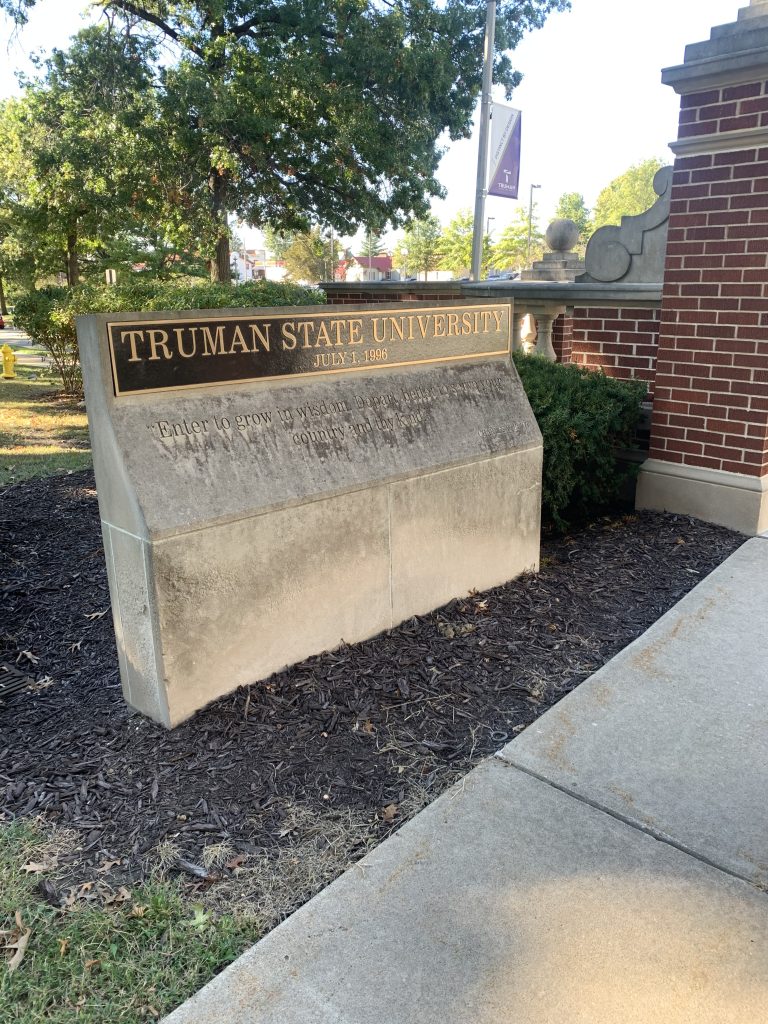
High achieving and competitive—this is how New Yorker magazine defines the “typical Truman student.” Truman State University has been granted a reputation of high academic achievement as is reflected in its being featured as a “Best Value College” by the Princeton Review.
Truman does not market itself in terms of academic rigor, but rather focuses on the opportunities presented to prospective students when surrounded by a culture of inquisition. Director of Public Relations Travis Miles describes Truman as a “step up” in education when discussing the University with prospective students.
“We want people to know this is a good school academically, and you can come here to be pushed academically,” Miles said. “Not necessarily stressing the rigor, but more focusing on the opportunity and how Truman can prepare you for the next thing—career or grad school or public service.”
How Truman is marketed influences the public opinion of the University, and the idea of attending a school filled with other students who are primarily there to study seriously appeals to students searching for a campus culture centered on academic drive.
Junior linguistics major Megan Guy transferred into Truman during the semester of 2025 and was well aware of the atmosphere of success. When talking about attending the University, people responded that she was transferring to the “smart kids’ school.”
Head of the communication and theater department Jay Self frequently hears the narrative of students finding themselves attracted to the school based on their desire for a certain degree of rigor. There is an understanding amongst those who attend the University that students are primarily there for a degree, to study and be surrounded by others who are focused on academics.
“It’s the same thing with campus culture,” said Jay Self, head of the communication and theater arts department. “I mean, when I meet with high school students to recruit them, I always tell them, ‘You know, we’re the nerd school, right?’ and they’re like, ‘Oh yeah, that’s exactly why I’m here.’”
The terms “Harvard of the Midwest” or “Princeton of the Prairie” are generically used to refer to schools of academic standard located in the Midwest in an attempt to distinguish these smaller schools from the rest. Truman has been referred to as the “Harvard of the Midwest” since Money Magazine coined the term in an article published in the early 1990s.
Miles made it clear the term is not officially used by Truman in any of its marketing, but it is a term that can be used by students in a way that evokes a sense of pride—Truman is academically challenging and the students who work hard should be proud of their efforts.
“The slogan was one of those things that people just thought was funny and cool and many students at the time latched onto it,” Miles said. “Maybe there’s a small sense of pride in it. The slogan gave Truman a distinguishing marker and I think kids just picked up on it, and it’s had a life of its own. I’ve seen T-shirts, buttons, stickers, but it’s never been anything the University developed and had never been used in its marketing. It’s more of an ‘If you know, you know’ situation.”
Guy, on the other hand, thinks the term is an accurate representation of the University and the campus culture. Guy has found the school to be rigorous and classes to expect a great deal from you — two things she looked for in a college.
“When I first heard people describing the ‘typical Truman student,’ I was like, ‘Oh, look, that’s me,’” Guy said. “There is a culture of ‘You need your homework done on time or early’ and you are involved with a bunch of stuff. It’s not just getting involved, this is who we are—we are involved with everything on campus, we have house pride, we have Truman pride. Taking pride in how well we do academically was definitely a part of that, which puts a lot of pressure on getting good grades.”
Self said he doesn’t agree with the accuracy of the term “Harvard of the Midwest” in relation to Truman because not every student holds themselves to the same standard. He notices that some students are more naturally gifted and academics come easily to them, while others have to work really hard to succeed.
Miles agrees with Self’s sentiment that the term can be used to boost student morale. The slogan isn’t intended to be a defining description of Truman, but Miles acknowledges it does give the University a sort of step up in terms of how it is advertised. The school is academic, and a title such as “Harvard of the Midwest” might encourage prospective students to scout out the University if they are searching for something more challenging.
“It’s almost a little tongue in cheek,” Miles said. “The term just has a life of its own. You’re looking at about 30 plus years now, and it’s just all from one story. It’s a very informal thing, and nothing we’ve ever really embraced or put out there necessarily.”
Guy relates to this sentiment, seeing as she specifically chose the university based on its reputation and the degree programs that are offered at Truman. Guy would describe herself as fitting the generic description of “Typical Truman student” and the reputation given to Truman often leads her to place more emphasis on her own academics.
“I have trouble with needing to be top of class,” Guy said. “I feel like I need to get stuff done, and coming into a space where everyone’s smart just really puts pressure. It feels like a pass or fail situation when it’s not, getting a few Bs is not the end of the world.”
Self views the competition of Truman in a different way—an opportunity to allow students to bond and find their niche. Truman offers a multitude of unique clubs and extracurricular activities that are centered on what Truman students are interested in.
Self thinks the nerdy nature that goes along with being an academically rigorous university should be embraced and celebrated.
“I joke that Truman students are nerdy,” Self said. “And the students really get into it, whatever they like. That’s where I focus on the nerdy. The nerdy things allow our students to embrace who they really are.”