ROTC Cannon Disappears from the Sidelines due to Budget Cuts
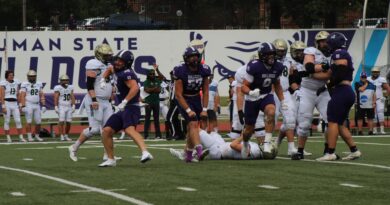
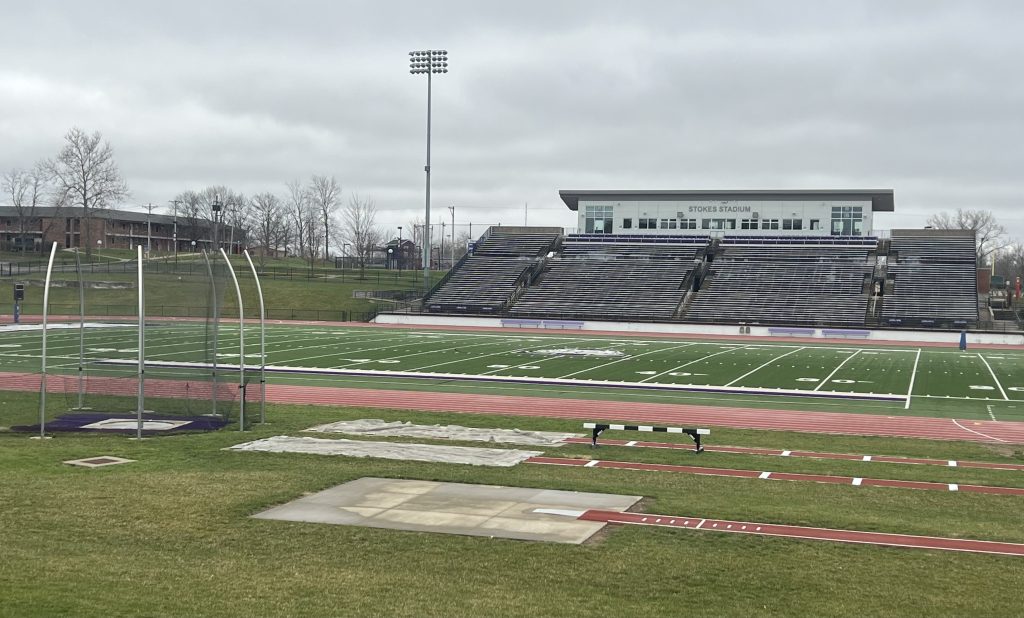
A booming presence has been missing from the sidelines of Stokes Stadium for a large part of this football season. Truman State University’s Army Reserve Officers’ Training Corps usually operates a small but mighty cannon in the east end zone that fires upon kickoff and after every Bulldog touchdown. The cannon’s disappearance was unexpected, and upon diving into the issue has a much deeper cause than once thought.
Lieutenant Colonel Steven Laz, Military Science Department chair, said removing the cannon crew from the schedule was one of the easiest options to help lighten the abnormally heavy load on his cadets this year as they balance the University’s academic workload with their increased ROTC responsibilities.
During late June, the Army announced that Truman was among 80 universities in the nation whose ROTC programs would be shutting down. However, after deliberation within the Army’s personnel department, the university was informed Sept. 2 that the University’s ROTC program would be one of nine programs allowed to operate for the foreseeable future, with one change—the program will become an extension of the University of Missouri-Columbia’s ROTC.
“For students on campus, the only thing that’s going to change is that there are going to be less military instructors … and then some additional coordination between the two schools, but for all intents and purposes, if you were to look from the outside in, [the program] would be the same,” Laz said. “We keep our Truman Bulldog battalion name, we keep our unit patch. The only difference is the LTC position will now be at the University of Missouri, and they will have oversight of the program.”
Since the program will officially become an extension program, and not its own separate entity, its cadet production requirement will lower. Laz explained his new requirement will be to produce fewer than 10 cadets rather than 15, which makes it easier for the program to exist at the University long term.
For now, the program is in the midst of a struggle to handle all of its duties. When the original decision was made to close the program, Laz said his sophomore class evaporated, as they all left the program. So, the corps is carrying less manpower than usual and is spread thin.
“[The program] had to prioritize [duties] with fewer cadets in the program to not monopolize the students’ time … with less instructors and less students, we just said what are the two big games we can support for Truman State, and it was family day and Homecoming,” Laz said.
Although the cannon crew will only make two appearances this season, it will only be a temporary reduction. Usually, the cannon crew appears at every Bulldog football home game, and Laz said he believes that they will be back on the sidelines full-time next season.
He said he believes he can recruit enough cadets to not only field a full cannon crew but also to sustain the ROTC program at the University long term. He’s had around 60 students express interest in the program so far this year, plus this year’s freshman class, who he thinks will all be retained.
The personnel reduction—causing cannon’s momentary disappearance —has been a byproduct of an immense restructuring initiative called “Transforming in Contact,” currently being undertaken by the US Army after direction by Secretary of War Pete Hegseth early this spring.
Under Hegseth, the Army is attempting to shift manpower and funding away from outdated projects and underperforming projects. As a byproduct of the initiative, the Army took a look at the numbers within its ROTC programs and determined that the University was not producing enough cadets to sustain its ROTC program under its previous directive.
In an open letter to Army leaders posted on the U.S. Army website, Secretary of the Army Dan Driscoll and Chief of Staff of the Army Gen. Randy A. George said the initiative is working to “deliver critical warfighting capabilities, optimize our force structure, and eliminate waste and obsolete programs.”
Fortunately, Truman’s ROTC survived the initial shock of the initiative, and with the resurrection of the program under a new, more sustainable directive, the Truman community looks forward to seeing the cannon’s presence return long term.
The cannon has been part of gamedays for over a decade.
”It’s a nice touch added to the gameday experience,” Associate Athletic Director Peter Young said. “Something would be missing without it.”