Students Overcome Mental Health Challenges
Truman students set high expectations for themselves in academic, social and work areas. Some students said their schedules and grade achievements can strain their mental health, but individuals have found ways to cope.
2025 Truman alum Brooke Wagner studied health science. She achieved Summa Cum Laude and honors in health science.
“I think there’s this reputation that Truman is the Harvard of the Midwest, so there is more emphasis put on academics and performance,” Wagner said.
Wagner isn’t the only Bulldog to notice this title or the related unspoken standards.
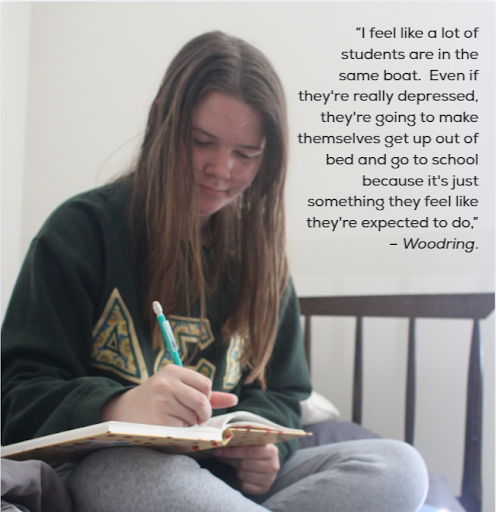
Another 2025 alum, Leann Woodring, was involved in Beta Alpha Psi, Alpha Sigma Gamma, Wind Symphony II and the Newman Center.
“I feel like when I do bad in school, I lose a part of myself,” Woodring said.
Woodring said the first time she got a B in a class was the second semester of her junior year at Truman. Since then, she graduated with only one other B.
“I did withdraw from a class because I thought I was gonna get a B in it,” Woodring said. “Who needs to take Calc 2? Nobody, or I was taking it for fun. And then, I think I got a 60 on my first exam, and then I cried a lot, and then I dropped it”
Along with the pressure of grades, Both Wagner and Woodring said they felt exhausted by their schedules.
In a typical week, Wagner spent 8-10 hours outside of class completing schoolwork and participating in campus organizations. On top of that, Wagner spent 24 hours gaining clinical experience outside of her health science major.
“I think there’s definitely times where I feel exhausted,” Wagner said. “Where I’ll get off a shift, and I didn’t have any time to do any schoolwork, and I’d feel disappointed in myself for not accomplishing all these things that I wanted to do.”
Wagner also said her schedule has prevented her from seeing her family as often as she’d like.
A senior philosophy and religion major, Angie Pacheo-Gomez, said she agreed with Wagner’s exhaustion and struggles with time management.
“I experienced a lot of fatigue, like I was just so tired, I couldn’t focus in class, I had no motivation to study or do anything at all,” Pacheo-Gomez said. “I would just like bed rot all day, and so I started [therapy through] the University.”
In spite of the exhaustion and external pressure, each of these Bulldogs developed ways to get through college.
Eventually, Pacheo-Gomez started therapy through university resources as a means to find a reliable coping strategy. For Woodring, she said talking to friends, journaling and listening to music also helped her mindset throughout college. She said she made sure to have a band class every single semester she could to break up her more intense classes.
Wagner said she finds comfort in mindless activities like watching Netflix, but she and her friends also try reminding themselves of everything they are grateful for.
“We’re so lucky to be able to learn this,” Wagner said. “[We try] to trick ourselves into not feeling horrible about the upcoming exam or be grateful to be like this is what we’re stressed about.“
When Pacheo-Gomez was younger, her parents had a hard time understanding her mental health. She said her peers were seeking help and helped her learn about what she could do.
Pacheo-Gomez said her parents are now a big help to her, but she hopes other people don’t have to struggle alone. She said she is so open about her mental health struggles in hopes that others are comfortable talking to her.